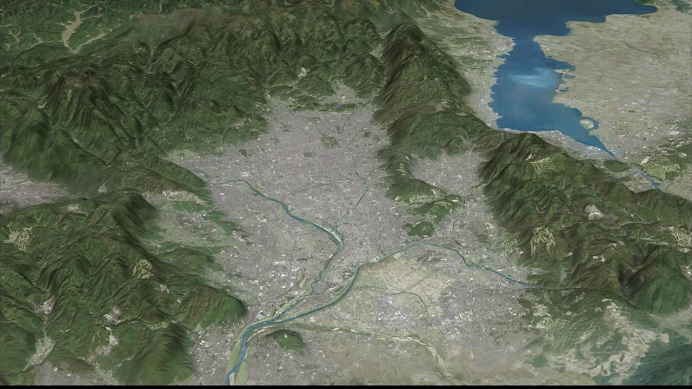
Aerial View of Kyoto

Aerial View of Kyoto

Saturday, February 27, 2010

Olympics and History


Skating for Japan in the the Vancouver 2010 Olympics is Oda Nobunari the 17th direct descendant of Oda Nobunaga. Nobunaga helped to unify Japan in the late 16th century. In 1582 one of his generals, Akechi Mitsuhide, betrayed him and attacked the temple, Honnō-ji, where Nobunga was staying. Nobunaga committed suicide at Honnō-ji during that attack.

Recently, young Nobunari came to Kyoto to pray at Honnō-ji for success in the Winter Olympics. The priests at the temple also prayed for his success. One wonders if he ventured north to Kenkun Jinja on Funaoka Yama or to Amida-ji on Termachi a bit NE of Shokoku-ji. It is said that Nobunaga's ashes are kept at Amidaji and his soul is enshrined at Kenkun Jinja. .

Tuesday, February 9, 2010

The 22 Highest Ranking Shrines in the Heian Period


The topic is the twenty two shrines sponsored by the imperial government in the Heian Period. How and when did such a list originate? It seems that sometime in the early 10th century there were complaints about the size of offerings given to the shrines and the lack of dignity that was afforded those gifts. Some of the priests were selling or consuming the offerings before they arrived back to their shrine. (Bowring, Richard. Religious Traditions of Japan. Cambridge p.189)

This may have led to a drastic reduction in the number of shrines which were called to give official prayers to stop the rain in 966. Only 16 shrines were requested for this special event. (Compare that number with the 2,861 shrines recognized and supported in Yoro Code in 718 which was then reduced to 573 official state shrines in 798)

According to Namiki Kazuko in the Encylopedia of Shinto, "In the mid Heian, 16 shrines (Ise, Iwashimuzu, Kamo, Matsuno-o, Hirano, Inari, Kasuga, Ōharano, Ōmiwa, Isonokami, Ōyamato, Sumiyoshi, Hirose, Tatsuta, Niukawakami, Kibune) were first included in this system. This was followed by the inclusion of Hirota shrine and then, somewhere during the latter half of the 11th or early part of the 12th century (during the reign of the Ichijō court), Yoshida, Umenomiya, Kitano, and Gion shrines were subsequently added (in that order). It appears that during the Insei period Hie shrine was further included in this grouping. Under the Taira reign in the mid-Heian, a plan to include Utsukushima Shrine was created, but it was never realized, leaving the final number of shrines in the system at 22."

Here are the names and locations of the 22 shrines:


Upper seven ------- name/ current name/ location
1. (神宮) Jingū (also Ise Jingū 伊勢神宮), Ise, Mie


2. Iwashimizu Hachiman-gū (石清水八幡宮) Iwashimizu Hachiman-gū Yawata, Kyoto Prefecture


3. Kamo Jinja (賀茂神社)
a) Kamo-wakeikazuchi Jinja (賀茂別雷神社), a/k/a Kamigamo Jinja (上賀茂神社) Kita-ku, Kyoto
b)Kamo-mioya Jinja (賀茂御祖神社), a/k/a Shimogamo Jinja (下鴨神社), Sakyo-ku, Kyoto


4. Matsunoo Jinja (松尾神社), Matsunoo Taisha, Ukyō-ku, Kyoto


5. Hirano Jinja (平野神社), Hirano Jinja, Kita-ku, Kyoto


6.Inari Jinja (稲荷神社), Fushimi Inari Taisha (伏見稲荷大社), Fushimi-ku, Kyoto


7. Kasuga Jinja (春日神社), Kasuga Taisha Nara City, Nara


Middle seven
1. Ōharano Jinja (大原野神社), Ōharano Jinja, Nishikyō-ku,Kyoto


2.Ōmiwa Jinja (大神神社), Ōmiwa Jinja, Sakurai, Nara


3. Isonokami Jinja (石上神社), Isonokami Jingū, Tenri, Nara


4. Ōyamato Jinja (大和神社), Ōyamato Jinja Tenri,Nara


5. Hirose Jinja (廣瀬神社), Hirose Taisha Kawai, Nara


6. Tatsuta Jinja (龍田神社), Tatsuta Taisha Sangō, Nara


7. Sumiyoshi Jinja (住吉神社), Sumiyoshi Taisha Sumiyoshi-ku, Osaka


Lower eight
1. Hie Jinja (日吉神社), Hiyoshi Taisha, Otsu, Shiga


2.Umenomiya Jinja (梅宮神社), Umenomiya Taisha Ukyō-ku, Kyoto


3 Yoshida Jinja (吉田神社), Yoshida Jinja, Sakyō-ku, Kyoto


4. Hirota Jinja (廣田神社), Hirota Jinja, Nishinomiya, Hyōgo


5. Gion-sha (祇園社), Yasaka Jinja (八坂神社) Higashiyama-ku, Kyoto


6. Kitano Jinja (北野神社), Kitano Tenmangū (北野天満宮), Kamigyō-ku, Kyoto


7. Nibunokawakami a/k/a Niukawakami Jinja (丹生川上神社) Niukawakami Jinja
Nakasha (middle shrine) Higashiyoshino, Nara


8. Kibune Jinja (貴船神社), a/k/a Kifune Jinja, Sakyō-ku, Kyoto


Interesting to note is that the Fujiwara Dynasty is represented on all three levels. Kasuga in Nara, Ōharano Jinja was their family shrine at the Nagaoka Capital. And finally, Yoshida was their "Kasuga" shrine in the Heian Capital.

In addition, all these shrines were closely connected with temples a few of them developed into megaplexes, i.e. large shrine-temple complexes. The best examples are: Kasuga-Kofukuji, Hie-Enryakuji, Iwashimizu Hachiman-Gokokuji, Gion-Kankeiji, Kitano-Kannonji.

In Heian Period these were the highest ranking shrines and enjoyed significant patronage. During the Middle Ages - Kamakura and Muromachi -this system became less important as official patronage declined.
Thursday, February 4, 2010

Nara Religious Sects


The 6 Buddhist Sects in Nara:

1. Hossō 法相宗 (Mahayana) 500,000 followers
2. Jojitsu 成実宗 (Theravada)
3. Kegon 華嚴宗 (Mahayana) 40,000 followers
4. Kusha 倶舎宗(Theravada)
5. Ritsu 律宗 (Theravada and Mahayana) 140,000 followers
6. Sanron 三論 (Mahayana)

Of these 6-- Hosso, Kegon and Ritsu are still active.
Question. At which temples in Kyoto can we find these early Nara sects represented?
some examples: 1.Kiyomizu-dera -- Hosso sect.
2.Hokongo-in near Hanazono Station-- Ritsu sect.
4. Joruri-ji in South Kyoto very close to the Nara border --- Ritsu sect.
5. Suzumushi Temple in the West of Kyoto-- Kegon sect.

Are there any other temples in Kyoto where these early Buddhist sects can be found?

About the 6 Nara schools, great info can be found here: http://www.onmarkproductions.com/html/six-nara-schools-seven-nara-temples.html

Brief description of Suzumushi from Kyoto Gaidai students.
http://www.kyopro.kufs.ac.jp/dp/dp01.nsf/b7eb328e75d9627a49256feb00103b33/2fa9c832d03b57784925701f001bef72!OpenDocument

This site has some information on Joruri-ji which is a fascinating temple to visit. In the area around it you can hike to another temple Gansen-ji and pass Kamakura Period Buddhist rock carvings. http://www.taleofgenji.org/joruriji.html

Thursday, January 21, 2010

Saiji and Toji's Mysterious Origin


The question of which Buddhist sect did Saiji and Toji belong to when Heian Kyo was established came up at our last meeting. According to Paul Groner in, Saicho: The Establishment of the Japanese Tendai School
"These were official temples established to protect the capital, not centers for Nara schools. In fact they were probably built to be used by the bureau of Buddhists and Foreigners (genbaryo or koroji) as centers for entertaining guests." In 823 when Kukai was given control over Toji it became Shingon Monastic Center.


The Office of Monastic Affairs was moved from Yakushiji in Nara to Saiji in Kyoto in the 800's. Sometime in late Heian, when Saiji was damaged by fire, the office of Monsatic Affairs was moved to Toji. Saiji seems to have slowly faded out of history at that point.
Information on Saiji as head of Monastic Affairs can be found here: Ryōgen and Mount Hiei: Japanese Tendai in the Tenth Century, Paul Groner

Finally, Onjoji. This is also know as Miidera, the temple overlooks Lake Biwa. Founded in 764, Onjoji (commonly known as Miidera) Temple is the headquarters of the Jimon sect of Tendai Buddhism and was once a rival of the mighty Enryakuji Temple on Mount Hiei.
Question? Can anyone find what Buddhist school Onjoji was at its founding?

Wednesday, January 20, 2010

Establishing the Ritsuryo


At the last meeting we discussed the 1. Ritsuryo Order 2. Fujiwara
Kyo 3. Heijo kyo, Nara's Capital and Todaiji's Vairocana.


Here is a summary of what we discussed in December and a few websites
connected with that discussion.


Ritsuryo Order.
Emperor Tenmu (672-686) ordered the writing of these
laws. Taiho Code was finished in 702.
In 718 these laws were updated in 20 volumes in the Yoro Code by
Fuhito no Fujiwara.
Basically the code established governance over the people,i.e.
how to get money from the land and how to supervise it. The code
also established clear relations between the ruling elite to make clear
their positions and to avoid violence during the passing of power.


Key points: 1. These laws were modeled on a Chinese system. 2. The
system did not always function according to the rules and often needed
modifications.


Composition of Ritsuryo in the Capital
1. A bureau to handle Shinto rituals
2. Advisory Council to the Emperor 3. 8 Ministries of State
4. Council of State Total Government Officials in Nara in 750 = 10,000


Composition of the Ritsuryo in the Land:
60 Provincial Headquarters (kokufu) with 550/600 district offices
supervising 4 million people in 4,000 townships
Kokufu had a staff in the hundreds and managed everything in that
province.


Kojiki and Nihon Shoki
Emperor Tenmu also set in motion the writing of the Kojiki finished
in 712 and
the Nihon Shoki completed in 720. Fortunately we can read a complete translation of the Kojiki at this website along with many other historical texts:
http://www.sacred-texts.com/shi/index.htm


Fujiwara kyo the first permanent capital in Japan, 694-710.
Previously: The ruler used the natal homes of his spouses as multiple palaces. Spouses tended to stay at or near their natal homes for several years after the marriage. As marriage alliances changed, it provided the ruler with another palace.
Before Fujiwara-kyo, construction style was largely thatch-roof and post-hole which rotted easily. The rules of avoiding pollution connected with death and small size of adminstration did not discourage movement.


Key Points of Fujiwara-kyo: Immigrant experts introduced geometrical
grid pattern for the city. Major gates and buildings used stone
foundations, mortise and tenon framing, and tile roofs.


Compromises: Shinto shrines and residences were built in rottable
style. Muliple palaces were maintained with summer residences or
regional capitals.


Archaeology of Fujiwara-kyo. Many stone structures have been
unearthed including a Sakafuneishi, and Matsuda Iwafune and a
sundial. Photos of these structures can be found here:
http://heritageofjapan.wordpress.com/inception-of-the-imperial-system...


Heijo kyo. Happy 1300 Anniversary. At Todaiji
there is the Great Buddha Statue. This can be called Vairocana Buddha
or Dainichi Buddha. It was the central Buddha of the Kegon Sutra.


Dainichi 大日如來 (Great Sun Buddha) is the translation of Sanskrit
“Vairocana,” while Birushana is the transliteration. Vairocana means
“belonging to / coming from the sunlight


http://www.onmarkproductions.com/html/birushana.shtml


Later Kukai connected Dainichi to Amaterasu. Vairocana became main god
of Shingon sect and was slightly modified concering mudra. This site
explains the different Shingon Vairocana and Mahavairocana which are
both the Dainichi Nyorai.


http://www.visiblemantra.org/vairocana.html